Friday, May 11, 2012
Amrakhand
This is a small part of an e-mail I wrote 2 years ago, soon after I wrote this post, to a few of my very special childhood friends. We were a group of 3 girls and 2 boys and their friendship was one of the best things that ever happened to me.
Do you remember our summer holidays? The months of April and May when the sun shone with all its might and we roamed aimlessly around the neighbourhood, barefoot, with nary a care in the world.
Except, of course, our exam results.
Tell me, do you remember those little white lies we told each other of how well we had done in our exams, only to sheepishly hang our heads in shame when our mothers got together and bemoaned our dismal results?
Do you remember the games we used to play? I know how that sounds - games we played - but back then, it simply meant lagori, dabba ice-spice, chor police, dodge ball, carrom, statue or colour - colour, to name some. We could play all day long; in fact, the day isn't just long enough to accomodate all our games, we used to complain!
Of course, there were times when we would fight. Bitterly. Loudly. Physically. We would take sides, split into groups, and declare a cold war.....only to reconcile a few hours later, and start playing again, as if the fight had never happened. Playing, fighting, reconciling - it was all so easy then.
Do you remember us glugging down glasses of cold panha, kokum sherbet or Rasna after playing in the hot sun, and egging you M, to burp? Louder, louder, we used chant. And you would oblige us every single time.
We would all collapse into giggles. We would laugh so hard that we would get hiccups. So we'd drink some more juice to get rid of the hiccups, and start with the 'burp' game again.
Do you remember landing up at odd hours at each others' houses, demanding to be fed? With our mouths stuffed with food, and without any regard for the feelings of the aunty feeding us, we would start loud arguments about how our respective mom was the 'world's best cook'.
Do you remember the races we had? No, we never had running or cycling races. We competed to find who could eat a ripe mango the fastest. We would soften the mango between our fingers and suck on it, the juice dripping down on our already stained and muddy clothes. K, your 'white' petticoats would take quite a beating! We never savoured the taste then, all we wanted was to eat as fast as possible.
And, do you remember looking up at the skies towards the end of May when the monsoon clouds would start to gather? We couldn't wait to get wet in the first monsoon showers, and yet the first showers would always sadden us a little. For with the first showers also came the realisation that our schools would reopen soon, and we would have to wait a whole year for the fun to begin again.
"Oh what a vacation we 've had", we would say over and over again. "We are never going to forget it".
So tell me....tell me that you still remember. Because I....I have never forgotten.
*******************************************************************************
I have said this before and I don't mind saying it again. No matter where I live, no matter what the season it is there at that time, to me the months of April and May will forever mean summer holidays.
And mangoes. Lots of mangoes.

And amrakhand. We preferred amrakhand over shrikhand and when the mango season was at its peak, there would be amrakhand at the table almost every other day.

Amrakhand is simply mango pulp mixed together with chakka or hung curd and sweetened with a bit sugar. Making it is very easy but it does need some pre-preparation.
Making chakka or hung curd:
Chakka or hung curd is nothing but yogurt from which excess water has been drained off.

To make hung curd, you will need a muslin cloth and a bowl. Place the muslin cloth over the bowl and pour the yogurt in the centre of the muslin cloth. Tie up the muslin cloth tightly with a string and suspend it over a hook. ( I suspend mine over a door knob) and place the bowl directly under the cloth. This is important, else you will end up with a puddle of whey!
After about 4 hours, open the muslin cloth and gently mix the yogurt, tie it up tightly once again and suspend it for another 4 hours. At the end of about 8 hours, you should end up with a creamy yogurt, almost like cream cheese.
(Don't discard the water strained from the yogurt. You can use it in your curries or to knead dough; I use it to make dugh).
Once you have the thick and creamy hung curd, making amrakhand is a breeze.
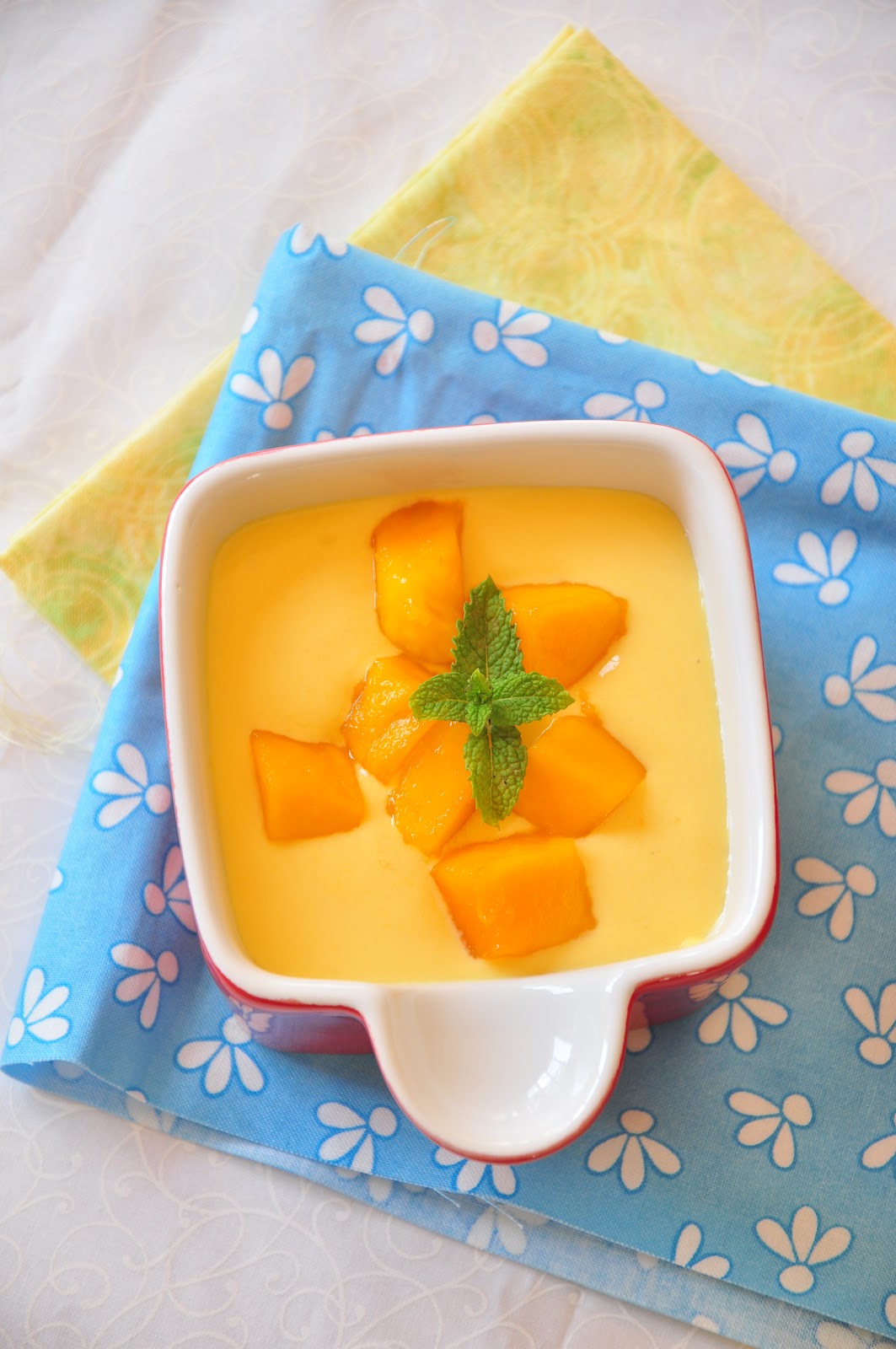
Amrakhand
Ingredients:
Hung curd: 2 cups
Fresh mango pulp: 1.5 cups - 2 cups ( see 'notes' below)
Cardamom powder: 3/4 tsp
Icing sugar: 2 tbsps, or to taste
Salt: a pinch
for garnishing, optional:
Chopped nuts: 2-3 tbsps
Mango cubes: 1/2 cup
Method:
Make mango pulp by pureeing mango cubes in a blender.
Place a sieve over a bowl, put the the hung curd and the mango pulp into the sieve and mix together with a spoon.

You could mix the two directly in a bowl, but passing it through the sieve ensures a smooth, lump - free, glossy amrakhand.
Add the cardamom powder and the salt. Do a taste test and add sugar as needed. I sometimes don't need to add any sugar, the sweetness from the mangoes is good enough for us.
Let it rest in the refrigerator for atleast a couple of hours before serving in order to allow the flavours to mingle.
Garnish with nuts and serve the traditional way, with hot puris.
Or, if frying puris is as tedious for you as it is for me, fold in a few mango cubes and serve it as a post meal dessert. Absolute manna from heaven!

Notes:
Canned mango pulp is very easy to get these days. It doesn't matter. Make amrakhand with fresh mangoes only. For nothing else can match the taste of fresh mangoes in amrakhand.
The colour of your amrakhand will depend on the type of mango used.
Use pulpy as opposed to juicy mangoes. In India, Alphonso mangoes work best. Here in Johannesburg, I used Heidi mangoes.
If I am serving the amrakhand with puris, I use 1.5 cups of mango pulp for 2 cups of hung curd in order to get a thicker amrakhand. I increase the mango pulp to 2 cups if I am serving it as a post meal dessert to get a more intense mango flavour.

Friday, January 20, 2012
Kelyachi Bhaji/ Ripe Banana Fritters
Aunty, obviously, had not had enough of catching up and invited me home. I had a very faint recollection of her being a fabulous cook and so, was in fact secretly glad that she had invited me over.
It was a lovely evening - there is something very entertaining in listening to the older generation reminisce about the days gone by, especially when such conversations are accompanied by delicious food and a steaming hot cup of tea. That evening, in addition to batata vada and khandvi, Aunty had made some delicious ripe banana pakoras. The taste was very familiar; my mom used to make something similar.
"These are delicious," I told her. "Mama used to make something similar."
"Not similar....your mom used to prepare exactly the same bhajis. In fact, I learnt it from her. I knew you liked these. Actually you know, when you were a child......" and she went on to recount some embarrassing account from my childhood as I continued to nibble, red-faced, on the delicious banana bhajis.

In my pursuit of making newer things like banana bread, I had forgotten about these bhajis. But I remember my mom making these
Kelyachi bhaji/ Ripe Banana Fritters
Ingredients:
Mashed over-ripe bananas: 1/3 cup
Whole wheat flour (atta)*: 2 tbsps - 3 tbsps
Jaggery: 2 tsps, grated
Cinnamon powder: 1/2 tsp OR cardamom powder: 1/4 tsp
Salt: a pinch
Oil for deep frying
* if you are using whole wheat pastry flour, grind it in your spice grinder to get a finer texture.
Method:
Add the jaggery, cinnamon powder and salt to the mashed bananas and mix well. Then add the flour, one tbsp at a time till your get a batter of dropping consistency.

Heat oil in a deep wok. When the oil is sufficiently hot, drop the heat to medium. Add a teaspoonful of batter and fry till the bhajis are evenly brown.
If you, like me, are averse to deep frying, you could also make these in a paniyaram pan.

Make the batter as above. Add a few drops of oil in each hole of the pan. When hot, fill with the batter.

Drizzle a few drops of oil around the sides, cover and cook for about 3-4 minutes. Using a chopstick, flip the bhajis and cook for another 3 minutes or until evenly brown.
Serve hot with a cup of steaming hot tea. Enjoy!
Wednesday, September 21, 2011
Tikshe Amshe (Spicy and Sour Curry)


To me, the appeal of the market lay more in the experience - elbowing my way through the crowds, watching my step on the wet floor, chatting with the vendors, haggling on the price - just for the sake of it, sometimes sampling the fare....the entire experience of shopping there was magical!
Come to think of it, the sights and sounds of a bustling market can never be matched by the quiet and sometimes, antiseptic aisles in a supermarket.


fish heads*
Of course, the fact that I could find many things in the market that the more popular supermarkets didn't sell made the trip to the wet market even more worthwhile! One of the things that I would buy exclusively from Tekka was fish. Not only was it fresher and cheaper, the variety was mind boggling. And once I discovered Tikshe Amshe on Manisha's blog, my trips to the market became even more frequent. For, that was the only place where I could find the tongue - tickling mackerel.

Tikshe Amshe ( recipe from Indian Food Rocks)
Ideally, make tikshe amshe with bangda or mackerel. If you don't get mackerel, substitute with any other (oily) fish of your choice. The last time I made this, I used kingklip which was very nice too.
If you don't eat fish but the gravy appeals to you, substitute with boiled eggs or baby potatoes. If using potatoes, boil them till they are cooked but firm. Peel and cut into two. Heat oil in a pan and fry the potatoes till they are browned and crisp on one side. I regularly make this gravy with potatoes for my husband who is allergic to fish. I will always remain biased to fish, but believe me, tikshe amshe with potatoes is very delicious too.
The colour of the gravy will depend on the variety of dried chillies you use. Byagdi mirchi gives the gravy that beautiful and inviting fiery red colour. I got the fiery red colour you see in the pictures the first couple of times I made tikshe amshe but lately, the colour isn't quite what I'd like it to be, all thanks to the dried red chillies I am stuck with at the moment.
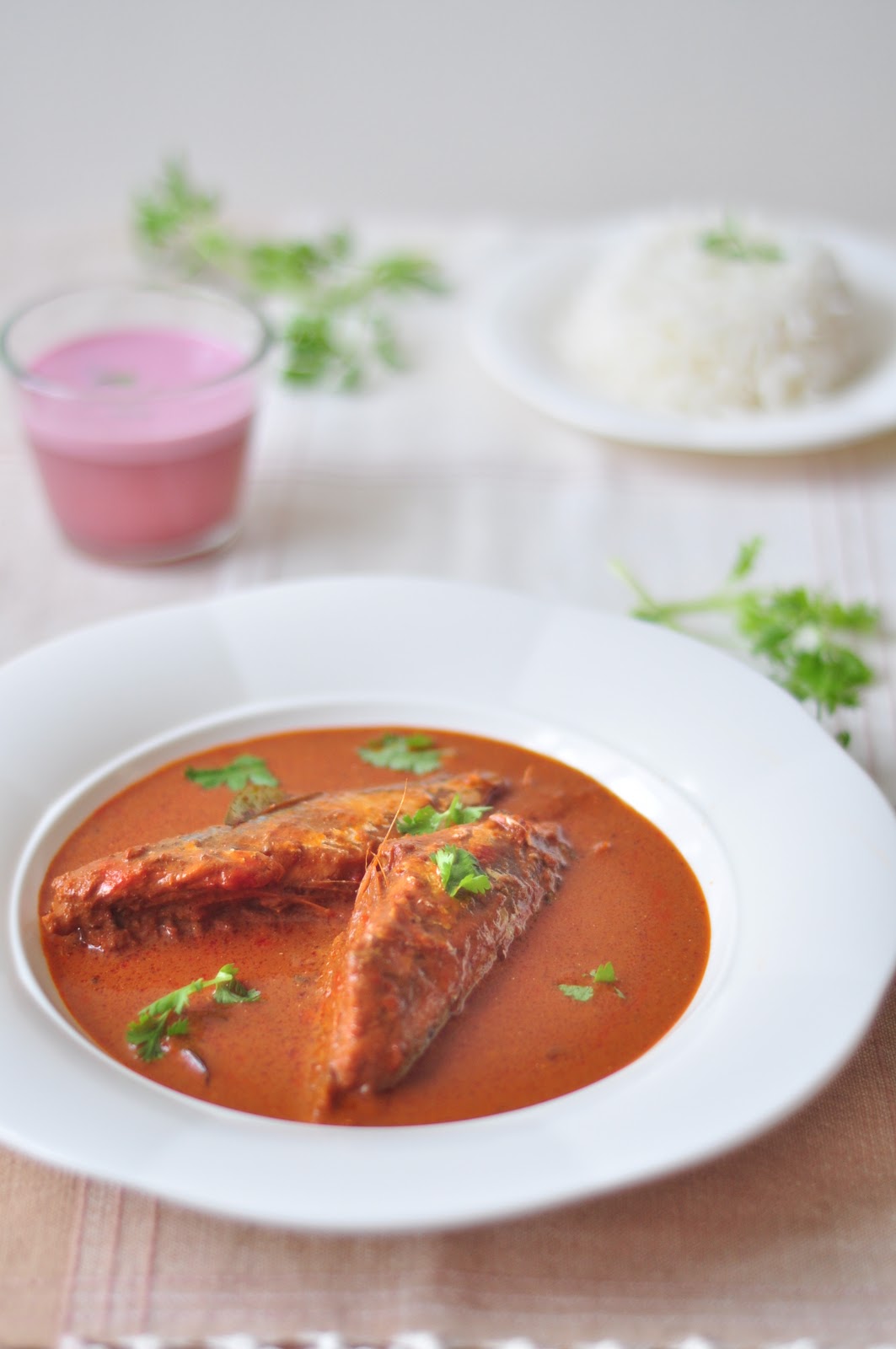
Ingredients
Mackarel - 4 nos
Dried red chillies - 20-25
Tamarind - 1 small ball, about the size of a small lemon
Sichuan peppercorns - 10-12 nos (original recipe uses 6-8 nos of tirphal)
Turmeric - 1/4 tsp
Grated coconut, optional - 1 tbsp
Garlic - 2 large cloves
Ginger - 1/2" piece
Curry leaves - 5-6 nos
Coconut oil - 2 tsps (or use any other cooking oil of your choice)
Coriander - for garnishing
Salt to taste
Method:
Soak the chillies in warm water for about 30 minutes to soften their skin.
Soak the tamarind in warm water for about 15 minutes and extract the pulp. Use very little water when soaking the tamarind in order to get a thick pulp.
Marinate the fish with the turmeric powder and a pinch of salt.
Coarsely crush the sichuan pepper and then soak them in 1/4 cup of water for about 15minutes.
Drain the chillies (don't throw away the water) and grind them together with the tamarind pulp, garlic cloves, ginger and grated coconut to get a smooth paste. Avoid using too much water; normally, the moisture from the grated coconut and the tamarind pulp should be enough.
In the same wok, add another tsp of oil. When hot, add the curry leaves followed by the masala paste, salt and sichuan peppercorns alongwith the water they were soaking in. Also add the reserved water from the drained red chillies. Bring to a boil.
Add the fish and cook for a further 3-4 minutes, or until the fish is cooked.
Serve hot with steamed rice. This is a fiery and spicy gravy that is best washed down with some sol kadhi.
Thursday, June 23, 2011
Thalipeeth
Papa kept coming into the kitchen every now and then, sometimes tasting the laddoos or nibbling on the chaklis. “Don’t we have any fruits? Where are the grapes?” he enquired. “Can’t you see the apples and bananas on the table? Look in the fridge, you’ll find some grapes, strawberries and oranges” ma replied sounding very irritated. “Take what you want and sit outside for some time; don’t keep coming in and out of the kitchen so often, it disturbs me no end.”
They seem to be arguing all the time, I thought to myself sadly. They used to be such a gentle couple, quite unlike the cantankerous pair I had seen over the last fortnight. I was really worried for them.
“Your papa,” ma whispered to me, “is losing it. Always interfering….just doesn’t what to do with himself. I just don’t know how to cope with him anymore!”
My heart went out to Papa. Recently retired, he wasn’t used to having time on his hands. He didn’t like watching T.V. and was never into reading. He tried his hand at gardening, but there wasn’t much he could do in the tiny one bedroom apartment with an almost non-existent balcony. So he would just potter around the house to while away the hours.
Ma turned her attention to the grains she planned to roast for making the thalipeeth bhajani. The sheer volume of bhajani that she was planning to pack horrified me. “Are you kidding ma? That bhajani will take up my entire baggage allowance! And can you just stop all this cooking? I don’t want you to tire yourself out.”
“Haven’t I told you so often, let me make all these things while I am physically able to. You have come home after 3 years, god knows when you will come again. Let me pamper you,” she smiled lovingly.
“Listen ma…..” but she cut off my protests with a curt “stop nagging me, go join your father outside.”
So I went and sat with papa who was solving a crossword puzzle, even as he was nibbling on some grapes. “Come beti, sit. Want a fruit? An orange? I’ll peel it for you.” He hadn’t forgotten that I hated peeling oranges.
“No, I’ll peel them myself,” I smiled. He went back to his crossword and as I watched him in amazement as he went from one clue to the next. He looked much healthier and more relaxed since his retirement but in the corners of his eyes, I could detect that vacant look of complete boredom and it troubled me a lot. Poor papa, he really needed to find himself something that would make him happy. I wished there was something I could do for him, but was at a complete loss of ideas.
“ ‘memories preserved, not pickled in jars but frozen forever’, now what kind of a clue is that?” he wondered aloud.
“Ummm..How about ‘photograph’?” I suggested
“8 letters….snapshot.”
“Hey papa, where are the albums? I want to see the old pictures.” But I knew where they would be, they had always been in the shelf in the showcase and I shot out of my chair and grabbed a few.
The albums were neatly labeled according to month, year and occasion – their marriage, their honeymoon, some vacations they had taken, my birth and so forth. Papa was a consummate photographer and for the first time, I realized how good he was. I never seemed to stand still in any pictures, but ma must have loved being his subject. The last of the albums had mostly blurry pictures – no, not taken by him but by a 14 year old me. But after my 15th year, there were no more pictures. I had taken the camera for a school picnic and dropped it, damaging it completely. The lie was easier, so I came back home and claimed that the camera was misplaced, possibly stolen by someone. Papa never replaced that camera, I had been too guilty to ask him to and that was the end of his hobby.
Feeling completely suffocated by the weight of my lie, I decided to step out for a bit. I must have gone out for a couple of hours and when I came back, ma was still in the kitchen, transferring some pickles into smaller bottles and papa was now attacking a Sudoku puzzle.
“Papa…for you,” I said, giving him the DSLR that I had purchased when I went out. “And maybe it is time for me to confess that your old camera wasn’t stolen. I….uh….I dropped it and it….it….broke.”
He nodded. “I’ve always suspected it. That is why this camera now, huh?” he said with a twinkle in his eyes.
In no time, he had figured the camera out and was clicking away endlessly. Pictures of me, our apartment, his plants, of the streets that ran around our apartment, of the skyline…
“Click ma’s pictures,” I said.
“You crazy? She’ll bite my head off if I go in there to take pictures,” he laughed. “This fruit bowl here will make for a better subject!”
Ma, in the meantime, had finished her marathon cooking session and walked out at exactly the moment that papa clicked the strawberries.
“Look at him, taking pictures of everything in this house except mine.”
He winked at me and turned to pacify ma by taking her pictures. He said something, she laughed and after a long time, they looked like the couple they used to be.
It didn’t matter that I didn’t have the camera in my hand to capture that moment - I knew it was an image that would live forever in my heart.
So this is my (as always?) late entry to our food fiction event, Of Chalks and Chopsticks that Sra revived last month. This time, there was a cue - in the form of a photo - of a man taking a picture of a bowl of strawberries.
Bongmom is hosting Of Chalks and Chopsticks for July. Head on over to her blog to know more.

Thalipeeth is very popular snack all over Maharashtra . It is a multi-grain, multi-legume pancake made from a special flour called 'thalipeeth bhajani'. Most Maharashtrian households will have bhajani in their pantries at all times and with good reason - thalipeeth is very easy to make once you have the bhajani and it is one of the most nutritious things you can dish out in a hurry.
The bhajani recipe varies from family to family. The following recipe is just a guideline - feel free to vary the grains/legumes (and the quantities) as per availability.
Thalipeeth Bhajani
Ingredients:
Bajra/pearl millet – 1 cup
Jowar/ Sorghum – 1 cup
Rice – ¾ cup
Wheat - ½ cup
Chana dal/Bengal gram – ½ cup
Urad dal/ Black gram – ½ cup
Moong dal/ Green bean – ½ cup
Coriander seeds – ¼ cup
Cumin seeds – 1/8 cup
Dry red chillies – ¼ cup, or to taste
Dry roast all the ingredients separately. Allow to cool. Grind them all together to a fine flour.
(normally, the grain – pulses mixture is ground in a flour mill. However, my friend grinds them at home in a spice grinder. It is a time consuming process and if you choose to do the same, do sieve the bhajani a couple of times and grind the gritty pieces again).
If roasting -grinding is too cumbersome, you could also buy the flours separately (in the same ratio as that of the grains), lightly roast them and mix them together to make a hassle-free bhajani.
The bhajani can last for months; if the weather in your part of the world tends to be hot and humid, pack it in small quantities in re-sealable bags/air tight containers and store in the fridge.
Once you have the bhajani, you can whip up thalipeeth in a jiffy!
Thalipeeth
Ingredients:
Bhajani – 1 cup
Onion – 1 small, very finely minced
Coriander leaved – ¼ cup, finely chopped
Chillies – 4, chopped
Jaggery – 1.5 tsps, grated
Salt
Water for kneading the dough
Oil
Method:
Mix together the onions, coriander leaves, chillies, jiggery and salt till the onions start to release some water. Set aside for 5 minutes and mix again. This helps all the ingredients to release their flavours.
Then add the bhajani to the above mixture and mix it in, you should get a mixture that resembles wet sand.
Keep adding water to it till you get a soft ball of dough.
Oil and heat a frying pan – it should be hot enough so that when you sprinkle a few drops of water on it, they should sizzle.
Take a small ball of dough, roughly the size of a golf ball, and flatten it to get a circle about 5” in diameter (I normally do this on a parchment paper, my mom does it straight on the pan) and place it on the pan.

Make a small circle in the centre with the back of a spoon. Drizzle some oil around the edges and in the centre, cover with the lid and let it cook for about 2-3 mins or until the underside is brown.

Flip it over and cook till small, brown spots appear.
Thalipeeth has to be served hot off the pan - a cold thalipeeth is an absolute no-no - preferably with a blob of butter melting over it. I serve it with some spiced yogurt and a salad on the side for a light and healthy lunch/dinner.
I am hosting MLLA - 36 this month and the multi-grain, multi-legume thalipeeth is my entry to the event.
Sunday, May 8, 2011
Batatyacha Kees (Spicy Grated Potatoes)
She had problems with my sense of style, she had reservations about my choice of clothes.
That dress? The one with the sequins? Are you serious?
The bright red shade of nail polish? Too flashy for your age.
I called her old-fashioned. After all at 15, I was convinced I had a better idea of fashion and style than her. Once I was financially independent, I would buy what I wanted, I decided.
She curbed my freedom, she doubted my ability to take care of myself.
All girls weekend out to celebrate the class 12 results? No way!
Discotheque? And in those clothes? Perish the thought.
Wait till I am 18 and old enough to move out of the house, I thought. I would do as I pleased!
She was extremely strict with my interactions with anyone other than family, she was always mistrustful of people I thought were perfectly nice.
Sleep on the terrace during summer holidays with a group of friends? Never.
Go to the 27 year old neighbour's (uncle's) house who lived alone and chat while she fetched my sister from school? Don't you dare.
I used to get confused by her behaviour sometimes. At times, I used to pity and get angry at her suspicious nature. I would not grow up and be like her, I swore.

It took me some years to finally realise that she was right about most things that she let or did not let me do, that whether she was right or wrong, she did have her valid reasons for the decisions she made. It has taken me longer to actually admit that as a teenager, I made life very difficult for her.
Today, I know that my mother is someone who became the villain in my life so that she could keep me safe always. She was that enemy who was driven by only one motive - my well-being.

My mom's cooking is sometimes counter - intuitive , but always simple. Not too many frills and absolutely fuss-free. She never made any attempts to teach me cooking believing that cooking was something that would come naturally to me whenever I had to handle my own kitchen. There is no need to learn cooking, she would say. Focus on your studies instead.
I, on the other hand, would pester her with my food demands and help her when she asked me to only after whining and registering my displeasure. You always disturb me just when the novel's reached an interesting juncture, I would complain.
Ironically, today, whenever I go home, I want to help her out in the kitchen and she pushes me out. Don't tire yourself, I tell her. It is my right to pamper you, she counters.

Batatyacha kees is something that is normally made for upvas (religious fast) but growing, this was one of my favourite food and would get made for breakfast or with tea in the late afternoons.
Think of it as an Indian version of hash browns - just a little more nutritious with the addition of nuts and definitely tastier than hash browns!
Ingredients:
Potatoes: 2 medium
Sweet potato*: 1 medium
Roasted peanuts: 1/2 cup
Fresh chillies**: 2-3, more or less depending on your personal spice preference
Cumin seeds: 1 tsp
Salt, to taste
Juice of half a lemon
Oil or ghee: 1.5 tbsp
(*normally, batatyacha kees is made with only potatoes, but my mom also uses sweet potatoes because they are very nutritious and for the delicate sweet flavour they impart.
**I use red and green chillies only to make the kees look colourful)
Method:
Wash the potatoes thoroughly, grate them (I normally grate them with the skin, you could peel them if you so desire) and soak them in water.
After about 5 minutes, discard the water and soak the potatoes in a fresh change of water for another 5 minutes.
Meanwhile, pound or grind the peanuts into a coarse powder.
(If you want to know how to roast and crush peanuts, hop on over to Nupur's blog One Hot Stove for a very comprehensive post on roasting and grinding peanuts).
Drain the water the potatoes were soaking in. Squeeze out the water completely by pressing small batches of the drained potatoes between your palms.
Melt the ghee in a wok. When hot, add the cumin seeds. Once the cumin seeds start to splutter, toss in the chillies.
Then add the grated potatoes, turn up the heat and stir fry till the potatoes are cooked. Finally add the crushed peanuts and stir for a further 2 minutes. Squeeze the juice of half a lime and serve hot.
Thursday, October 28, 2010
Sooji ka Halwa
For all our love of sweets, sooji ka halwa as we call it (or rava kesari as the husband calls it or goda sheera as I call it) is something that I had made very, very rarely in the first few years of marriage. Yes, I know how ridiculous it must sound. After all, sooji ka halwa is so easy to make, it tastes divine and almost everybody loves it.
The problem with sooji ka halwa is that though it is easy to make, it is as easy to mess up.
And, well my first attempt at making it was quite a disaster. I think the husband must have been quite scared off by that attempt for whenever I would offer to make sooji ka halwa, he would always come up with some alternatives. "Why don't you make some fruit salad instead? Or, how about some payasam? Or, let us get some ice cream." You get the drift, right?
"Hmmm...now this is going to be interesting!"
I don't think he missed eating sooji ka halwa. I mean, if he did, wouldn't he have asked my MIL to make whenever we went visiting or when she came over?
Then, my daughter had sooji ka halwa on a playdate and took a liking for it. When she started demanding that I make it at for her, the husband very amused.
A long call to mom and some detailed instructions later, I was all ready to tackle sooji ka halwa. Turned out that making sooji ka halwa was after all really very, very easy.

Here's how I make it:
Ingredients:
Semolina: 1 cup
Milk: 2 cups
Water: 1/2 cup
Ghee/Clarified butter: 3 tbsps + 1 tbsp
Sugar: 3/4 cup (you could also increase it to 1 cup if you like it sweeter, I use 3/4 cup)
Cardamom powder made from crushing about 8-10 cardamom pods)
Salt: a pinch
optional:
some raisins, cashewnuts and almonds
Banana: 1 medium sized
Method:
In a small vessel, combine the milk and the water, toss in the raisins, if using, and bring it to a boil.
While the liquid boils, pour the semolina into a wok and start roasting it. Once it is warmed, say 2 minutes later, add 3 tbsps ghee to it. Continue to stir - and stir constantly (a little inattention and the semolina can burn) and roast till the semolina turns light brown in colour and emits a wonderful aroma.
(My mom says that when the aroma can be detected from a distance is when the semolina is roasted right).
Once the liquid comes to a boil, slowly pour it into the roasted semolina, stirring constantly. (Careful when pouring as a plume of steam rises up when the milk hits the semolina in the pan).
Stir well and flatten lumps, if any, with the back of the spoon. Then cover the pan and steam on a low heat for about 4-5 minutes.
Stir again, scrapping off any semolina stuck to the bottom of the pan. Then add the sugar, cardamom and nutmeg powders and a pinch of salt. Cover and steam again for another 5 minutes.
Then add in the mashed banana, if using, and give it a good stir. Finally, add a tbsp of ghee, mix well and serve hot.
"Don't feed me baby food!"
I tasted the halwa and did a little celebration dance in the kitchen. It was delicious! I expected him to similarly exult, but he had was a puzzled look on his face. He tasted it and then tasted it again. “Bananas?” he frowned. “Oh I get it. One of your 'make everything healthy – sneak in fruits and vegetables wherever possible' experiments!”
“Experiment? What are you saying....wait a minute....haven't you had sooji ka halwa with bananas before?"
Turned out that indeed he had never had it. Yeah, go figure that!
"Whaaaattttt.....you are not really serious, are you?"
Even with the bananas, he did relish the sooji ka halwa but halfway through his serving, there came on his face a look of complete disbelief and a mild disgust. He was looking at my bowl as if a cockroach had fallen into the bowl! But the only thing that was there in my bowl was some mango pickle. He simply couldn’t believe what he was seeing.....halwa with pickle? I was equally perplexed at his disbelief. I mean how can anyone not like sooji ka halwa with mango pickle?

It is without doubt the best way of enjoying the halwa – in a spoonful, there is a medley of flavours – the sweet halwa, the sour and spicy pickle and the gentle whiff of bananas – all coming together in a taste experience that is tongue tickling and unlike any other.
So, the next time you make sooji ka halwa, forget garnishing it with almonds and cashewnuts. Use some pickle instead. You’ll love it, I promise.
This is my entry to Sharmi's CFK - Festive Foods that Suma is hosting this month.


